Growing businesses face a critical decision that determines operational efficiency and scalability: implementing AI-powered automation or maintaining manual processes. The data overwhelmingly supports AI automation as the superior choice for companies seeking sustainable growth without proportional increases in overhead costs.
The Manual Process Challenge
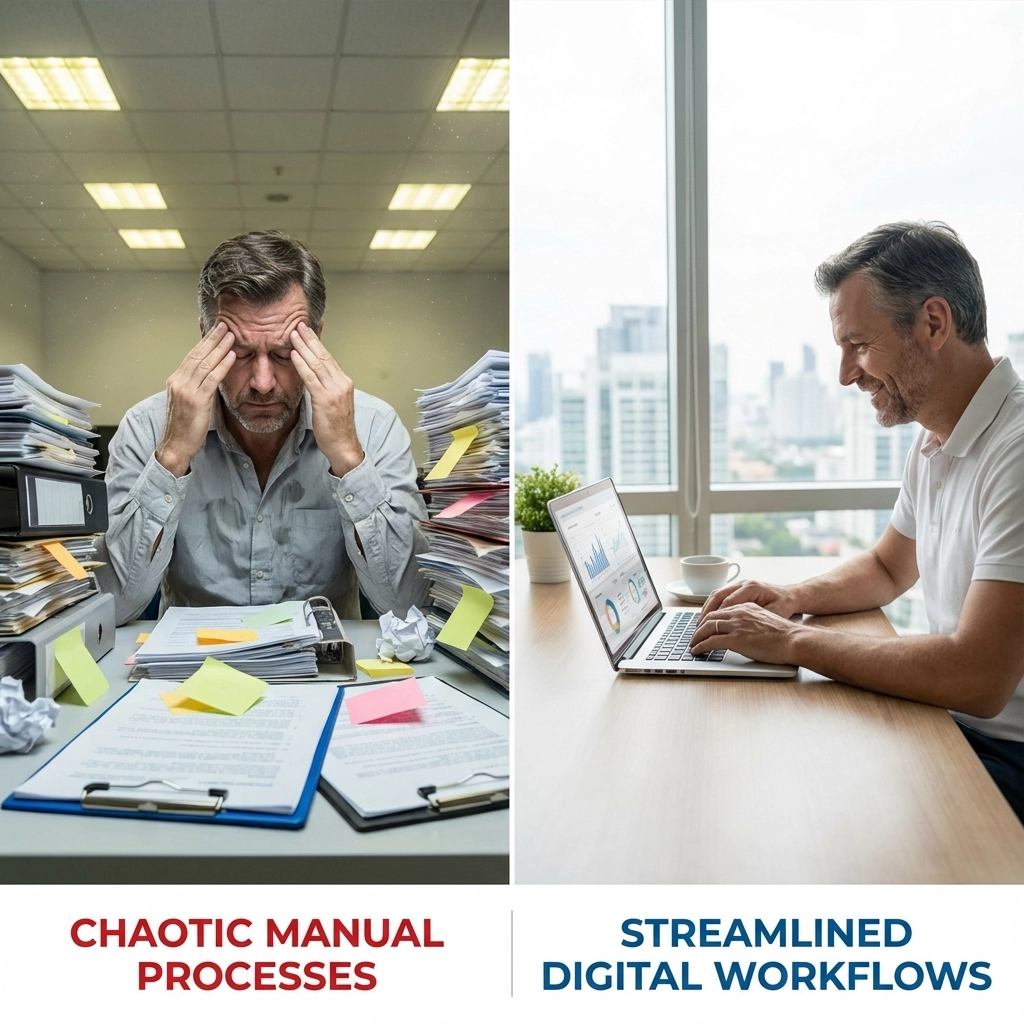
Manual processes create bottlenecks that compound as business volume increases. Traditional workflows require staff to handle repetitive tasks individually: recording orders on paper, manually checking inventory levels, updating spreadsheets, and coordinating schedules through email chains. These methods worked for smaller operations but become unsustainable when processing higher transaction volumes.
The bakery industry exemplifies this challenge perfectly. Manual operations involve staff taking orders on paper during peak hours, physically checking ingredient stock, and updating production schedules by hand. During busy periods, these processes create delays, increase error rates, and require additional personnel to maintain service levels.
Manual systems lack centralized visibility, meaning managers discover critical issues like stockouts or scheduling conflicts only after they disrupt operations. This reactive approach costs businesses revenue through missed opportunities, customer dissatisfaction, and emergency solution expenses.
Zoho AI Automation Advantages
Zoho Creator’s AI-powered platform transforms business operations through intelligent automation that handles routine tasks with speed and accuracy that manual processes cannot match. The system processes workflows automatically, eliminating human error while providing real-time operational visibility.
Speed and Processing Power
Automated workflows execute tasks in seconds rather than minutes or hours. Order processing, inventory updates, and task routing occur simultaneously across multiple channels without requiring staff intervention. This processing speed enables businesses to handle increased volume during peak periods without service degradation.
Zoho’s Zia AI assistant generates workflows from natural language prompts, reducing setup time from weeks to hours. Teams describe their processes in plain language, and the system creates optimized workflows automatically. This capability allows rapid deployment of automation solutions without extensive technical knowledge.
Scalability Without Proportional Staffing
Manual processes require linear increases in personnel as business volume grows. Automated systems handle exponential increases in transactions, orders, and data processing without additional staff requirements. This scalability advantage becomes critical during growth phases when hiring cannot keep pace with demand.
The system manages multiple workflows simultaneously, processing customer requests, updating databases, and coordinating team activities without capacity limitations. Growing businesses maintain service quality while expanding operations through automation rather than workforce expansion.

Real-World Performance Comparison
The operational differences between manual and automated processes become clear through specific industry examples. Manual bakery operations during peak hours involve staff juggling multiple tasks: taking orders, checking ingredient availability, coordinating with kitchen staff, and managing delivery schedules. Each step requires individual attention and creates opportunities for errors or delays.
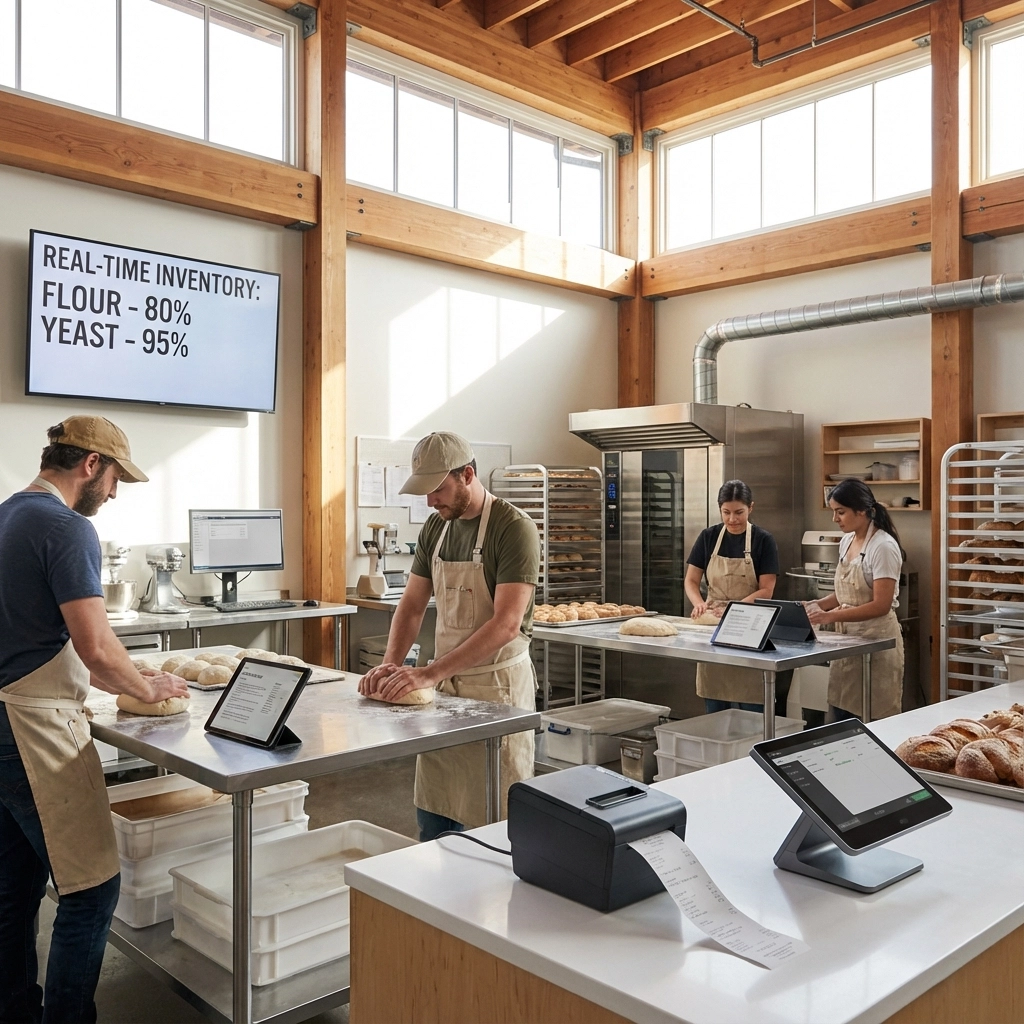
Automated systems process the same workflows through integrated platforms. Point-of-sale systems capture orders automatically, inventory management updates ingredient levels in real-time, and task management systems prioritize work based on delivery deadlines and preparation requirements. The entire process flows seamlessly without manual intervention.
Error Reduction and Cost Control
Manual processes generate costly errors through miscommunication, data entry mistakes, and coordination failures. Incorrect orders require refunds, excess inventory ties up working capital, and scheduling errors create customer service issues. These problems compound as transaction volume increases.
Automated systems eliminate data entry errors through direct system integration. Order information flows from initial capture through fulfillment without manual transcription. Inventory levels update automatically, preventing overselling or stockout situations. Scheduling algorithms optimize resource allocation based on capacity and deadlines.
Strategic Implementation Benefits
Zoho Creator bridges workflow management and business process management approaches, providing flexibility for companies with varying automation needs. The platform handles simple task automation and complex multi-step processes through the same interface, enabling gradual implementation as business requirements evolve.
Multi-Channel Integration
Modern businesses operate across multiple communication channels: web portals, mobile applications, email systems, and phone support. Manual processes struggle to coordinate information across these channels consistently. Automated systems synchronize data across all touchpoints, ensuring customers receive consistent information regardless of interaction method.
Zoho Creator’s multi-channel notification system updates stakeholders automatically when process steps complete or require attention. Project managers receive status updates, customers get delivery notifications, and team members see task assignments without manual communication efforts.
Real-Time Monitoring and Adjustment
Manual systems provide limited visibility into operational performance until problems become apparent through customer complaints or missed deadlines. Automated platforms offer real-time dashboards showing workflow status, bottleneck identification, and performance metrics.
This visibility enables proactive management rather than reactive problem-solving. Managers identify potential issues before they impact customers and adjust resource allocation based on actual demand patterns rather than estimates.
Industry-Specific Applications
The olive oil industry case study demonstrates automation’s transformative impact on traditional businesses. Ozelia, a Turkish olive oil company, transitioned from paper-based processes to comprehensive Zoho automation. The implementation provided real-time inventory monitoring, demand prediction capabilities, and complete operational visibility: improvements impossible through manual methods.
The company gained 360-degree operational awareness, enabling data-driven decisions about production planning, inventory management, and customer service. These capabilities represent fundamental business advantages rather than incremental improvements over manual processes.
Implementation Considerations
Successful automation implementation requires understanding current workflow inefficiencies and identifying high-impact improvement opportunities. Businesses should prioritize automating repetitive tasks that consume significant staff time: invoice processing, customer support ticket routing, staff onboarding procedures, and sales follow-up activities.
Zoho Creator’s visual workflow builder enables non-technical team members to create and modify automation rules without programming expertise. This accessibility ensures automation solutions can evolve with business requirements without dependency on external technical resources.
For growing businesses evaluating operational efficiency improvements, our services include workflow analysis and automation implementation planning tailored to specific industry requirements and growth objectives.
ROI and Business Impact
The financial benefits of AI automation extend beyond labor cost reduction. Automated systems improve customer satisfaction through consistent service delivery, reduce operational errors that require expensive corrections, and enable revenue growth without proportional cost increases.
Setup time reduction from weeks to hours accelerates implementation timelines and reduces opportunity costs associated with delayed automation benefits. Growing businesses achieve operational efficiency improvements immediately rather than waiting months for manual process optimization results.
Zoho AI automation represents a strategic investment in scalable operations rather than a cost center requiring ongoing justification. The platform’s capabilities grow with business requirements, providing long-term operational advantages that manual processes cannot deliver regardless of staffing levels or training investments.